
Proven Solutions. Practical Impact


See how FR Prototypes turns complex engineering challenges into systems that ensure reliability and deliver actionable data.
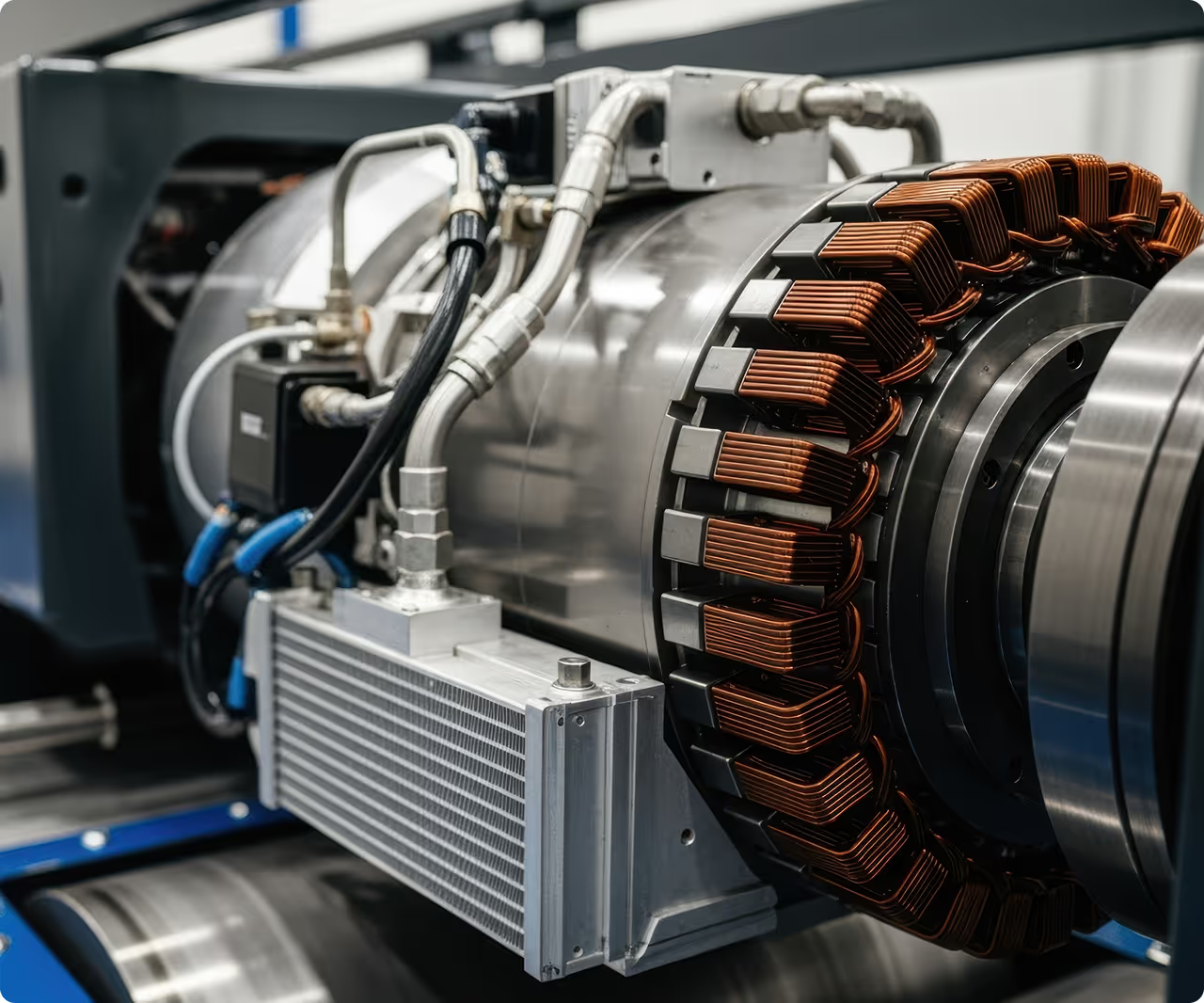
BLDC servo motor test stand
A test stand for mechanical and electrical validation of BLDC motors with high-frequency data logging.
Challenge
One of the leading manufacturers of components for the aerospace industry asked FR Prototypes to develop the electrical and software parts of a test stand for their manufactured motors, while the mechanical side was handled by the client’s engineers.
The system needed to measure and log mechanical and electrical parameters of the motors, emulate the mechanical load at selected torque levels, communicate and control third-party drives via CANopen or RS232 protocols, and be easy to operate with full access to all parameters and functionality.
Solution
To implement the required functionality, we prepared a hardware architecture that included a Windows NUC PC embedded inside the electric box, acting as the master for lower-level Siemens and cRIO controllers. A Siemens Simatic S7-1500 controller with a Sinamics V90 PN and 1FL6 servomotor generated the required torque on the shaft of the tested motor, while a cRIO controller handled CANopen communication with the servodrives and acquisition of measured parameters.
Impact
Easy operation
via LabVIEW application on the host PC
Wide compatibility
supports a wide range of motors with standard communication for third-party drives
Precise load emulation
mechanical load can be emulated from 1 to 33 Nm
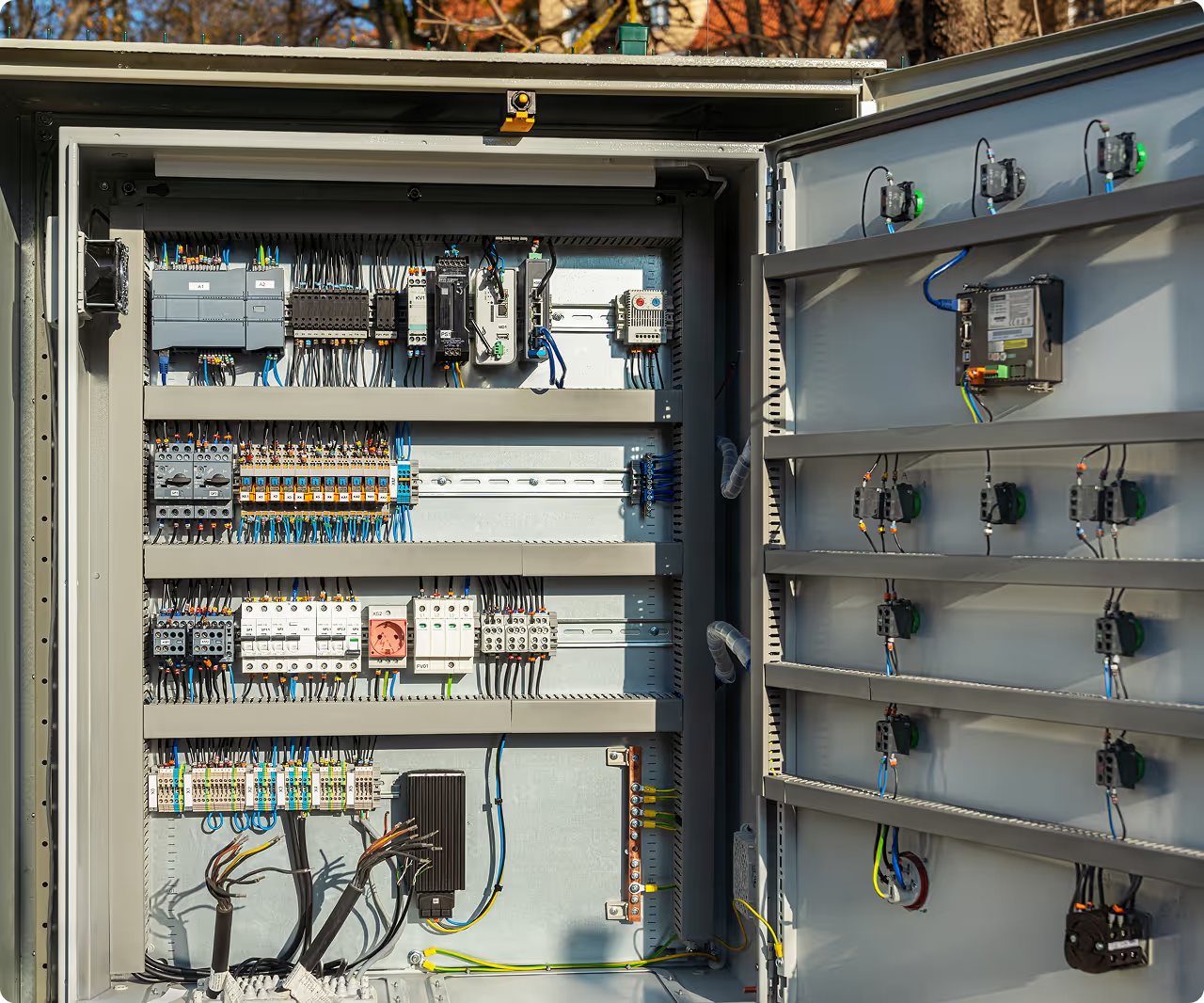
Control system for the vertical furnace
The control system was developed for a 7-zone vertical furnace with long-term temperature logging.
Challenge
One of the leaders in custom heating solutions, Thermash LLC, asked FR Prototypes to select automation hardware and develop control software for the furnace. The system needed to control each zone individually with a 1 °C tolerance in the 20 °C – 1000 °C range, while zones were not separated and could affect each other.
It also had to turn off any zone if the temperature rising uncontrollably, continue operation after a power failure, provide long-term temperature logging with local data analysis, and withstand a harsh industrial environment with wide temperature and humidity variations.
Solution
To meet these requirements, equipment was selected to allow precise temperature control and reliable long-term operation in harsh conditions. The system includes an all-in-one Advantech PC with fail-safe Windows 7 Embedded, IP66 front protection, and a resistive touch screen suitable for operation with gloves.
Temperature control and logging are handled via a LabVIEW application, which automatically records temperature parameters and provides local data analysis.
A Simatic S7-1200 controller manages a dedicated PID temperature controller to achieve high precision in multizone applications, and preserves the process state during power failures, restoring the process at the interrupted stage.
Impact
Precise multizone control
each furnace zone is individually managed with 1 °C tolerance across the full temperature range
Reliable system
built with components designed to operate for years in harsh industrial environments
Fast analysis
any heating process can be reviewed and analyzed locally with a single click
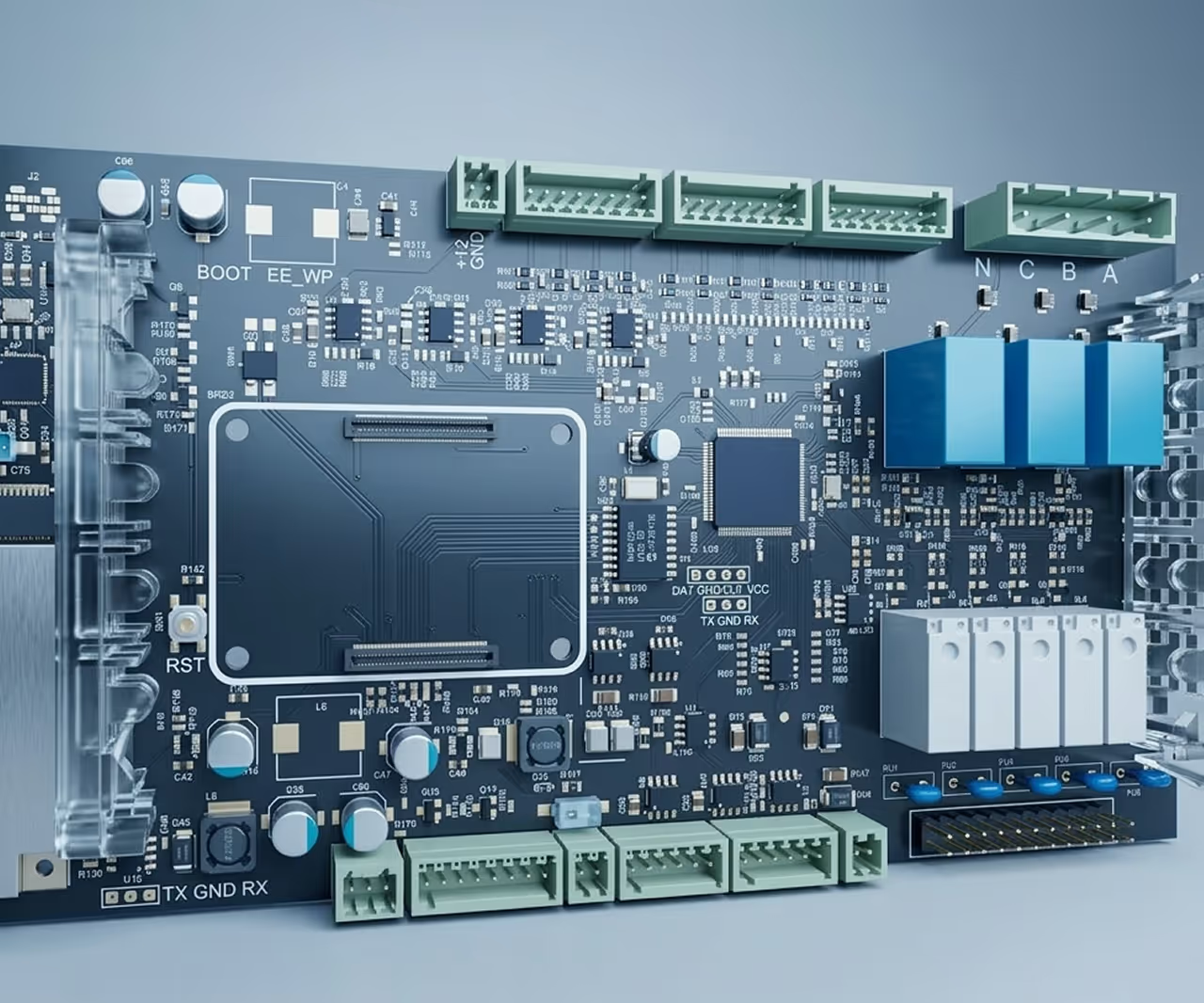
The Charging Board for EV charging stations
The changing board as a part of charging station based on J1772 protocol.
Challenge
One of the component manufacturers for charging stations asked us to develop a board that allows charging up to five electric vehicles simultaneously. The board had to monitor and control the current and voltage levels across all charging ports while also regulating its own temperature to prevent overloading.
In addition, it needed to manage connector locking mechanisms and communicate with other modules within the charging station. The system also had to support cellular modem functionality to enable communication with a remote server.
Solution
As a central controller of the charging board was selected STM32F controller. This controller provides reliability of industrial level and enough performance for monitoring fast changing parameters like voltage or current.
Relatively simple connection of external transceivers allows this controller to communicate with other components via CAN and RS485 hardware protocols. The cellular modem was implemented with a Raspberry PI onboard computer with LTE modem.
Impact
Compact board
with all necessary functionality integrated into a single design
Faster path to production
using standard components that reduced development time
Easy LTE communication
with Raspberry Pi and a compatible modem
Let’s Work Together!
Fill the form and we will contact you to find the best time for our consultation!